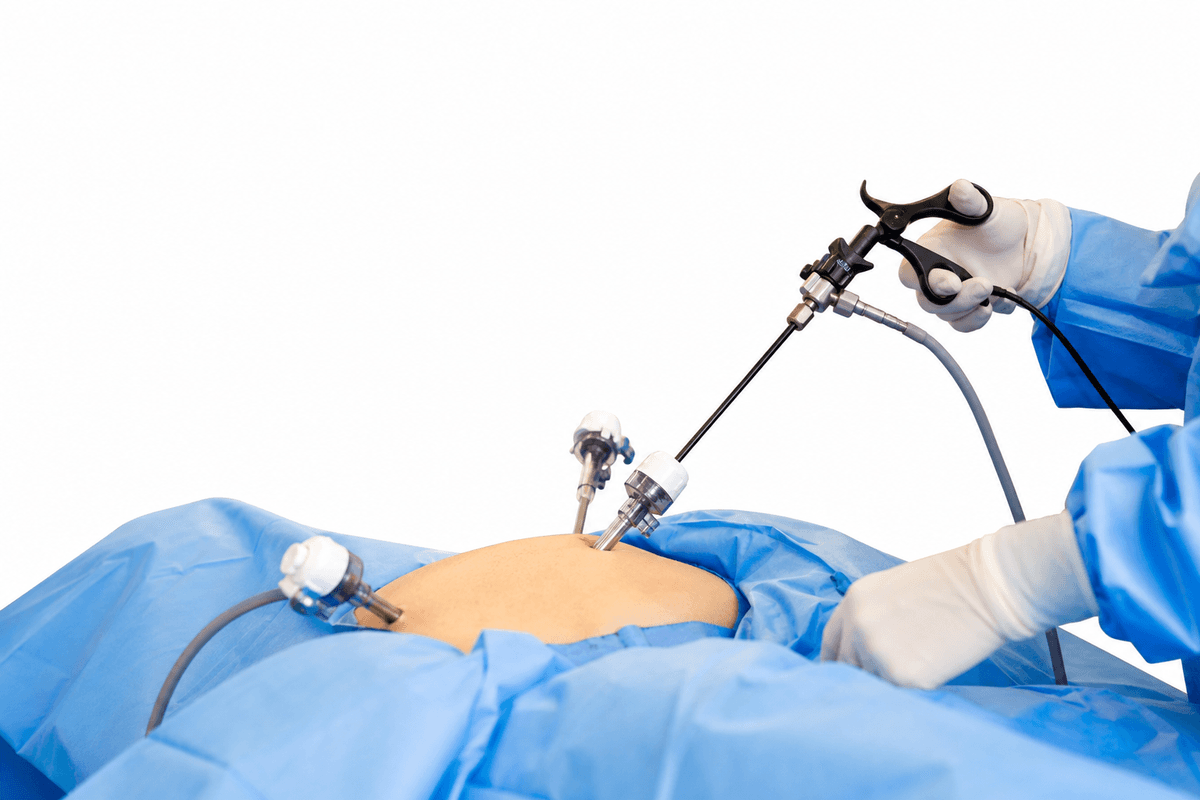
Performed by Dr. Ravi Chandra Reddy Obili at Dr Ravi Chandra Reddy
Laparoscopic Hernia Repair in Visakhapatnam is a minimally invasive surgical procedure that uses small incisions and a camera to repair hernias with precision. This advanced technique results in less pain, smaller scars, and quicker return to normal activities compared to traditional open surgery. Dr Ravi Chandra Reddy Obili, an experienced Surgical Gastroenterologist, provides expert laparoscopic hernia repair with personalized care and proven outcomes.
We believe in honest, upfront disclosure so you can make an informed decision.
A step-by-step look at what happens during this procedure.
Three to four tiny incisions (5-10mm) are made in the abdominal wall to access the hernia site.
A laparoscope with a high-definition camera is inserted to visualize the hernia and surrounding structures on a monitor.
The herniated tissue or organs are carefully pushed back into their proper position within the abdominal cavity.
A surgical mesh is positioned over the weakened abdominal wall area to reinforce and strengthen the repair.
The mesh is secured with surgical tacks or sutures, and the small incisions are closed with dissolvable stitches or surgical glue.
A structured, patient-first approach from first consultation to full recovery.
Dr Ravi Chandra Reddy conducts thorough physical examination and imaging studies to determine hernia type, size, and optimal surgical approach for each patient.
Using state-of-the-art laparoscopic equipment and high-quality surgical mesh, Dr Reddy performs precise hernia repair with minimal tissue trauma and optimal visualization.
A tailored pain control protocol including local anaesthetic infiltration and multimodal analgesia ensures patient comfort during recovery.
Dr Ravi Chandra Reddy provides detailed postoperative instructions and schedules follow-up visits to monitor healing, address concerns, and ensure successful long-term outcomes.
What to expect at each stage of your recovery journey.
Mild discomfort at incision sites managed with pain medications. Patients can walk and perform light daily activities. Avoid heavy lifting and strenuous exercise. Follow wound care instructions to prevent infection.
Gradual return to normal activities including work for desk jobs. Continued avoidance of heavy lifting over 10kg. Incision sites heal with minimal scarring. Most patients feel significantly improved with reduced pain.
Full return to all activities including exercise and heavy lifting as cleared by surgeon. Mesh integration complete with strong abdominal wall repair. Final follow-up to confirm successful healing and no recurrence.
Small laparoscopic incisions result in barely visible scars compared to large incisions from open surgery, providing excellent cosmetic results.
Most patients return to normal activities within 2-4 weeks, significantly faster than the 6-8 weeks required for traditional open hernia repair.
Minimally invasive approach causes less tissue trauma, resulting in significantly less postoperative pain and reduced need for pain medications.
Advanced mesh placement techniques and better visualization result in recurrence rates under 5%, ensuring long-lasting repair and patient satisfaction.
Let's clear up some of the most common myths about laparoscopic hernia repair.
Get a personalised assessment from an experienced specialist. Understand your options, ask your questions, and decide with confidence.