Treated by Dr. Ravi Chandra Reddy Obili at Dr Ravi Chandra Reddy
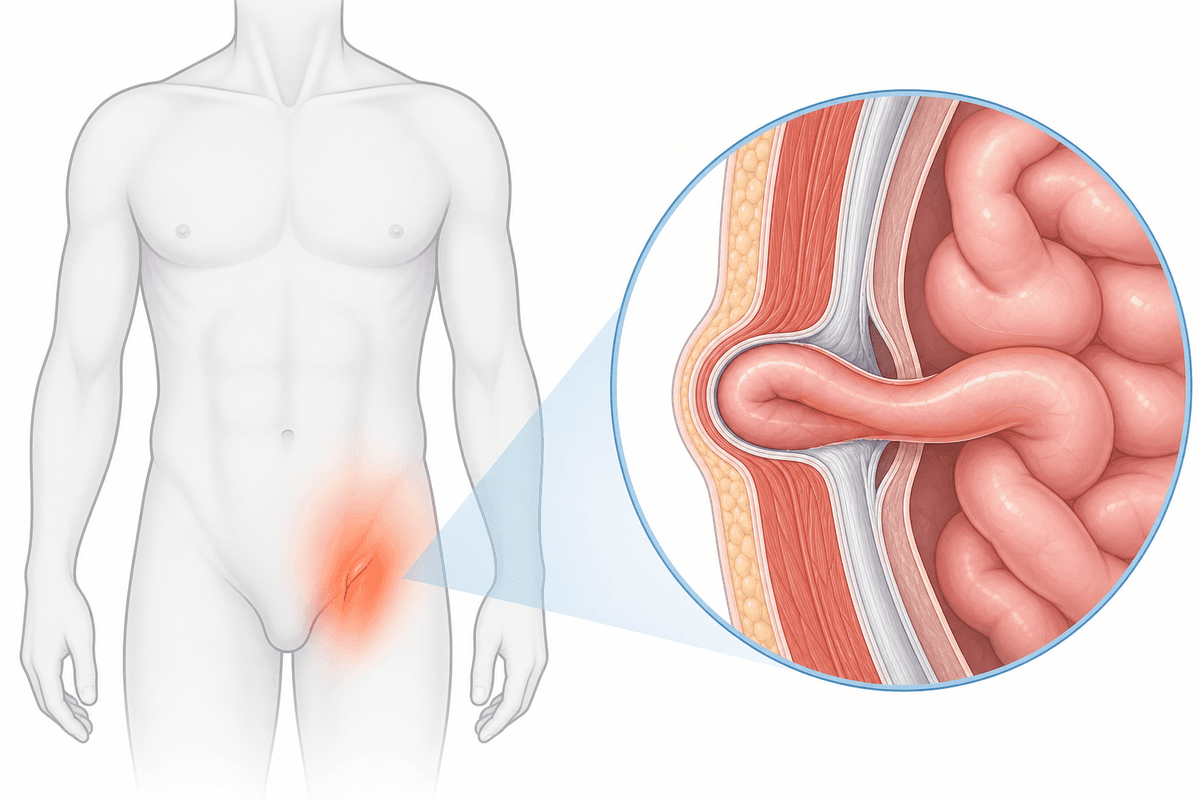
An inguinal hernia occurs when tissue pushes through a weak spot in the abdominal muscles in the groin area, commonly affecting men in Visakhapatnam and worldwide. This condition manifests as a visible bulge and can cause discomfort during physical activities or straining. Dr Ravi Chandra Reddy Obili provides comprehensive surgical treatment for inguinal hernias using both traditional and minimally invasive approaches at his practice in Visakhapatnam.
The most common type that occurs when abdominal contents protrude through the internal inguinal ring, following the path of the spermatic cord. This type is often congenital and more prevalent in younger patients and children.
Develops when abdominal contents push directly through a weakened area in the abdominal wall muscle in Hesselbach's triangle. This type typically occurs in older adults due to age-related muscle weakness and chronic strain.
Occurs when a previously repaired hernia returns at the same location due to failed repair, infection, or continued strain on the surgical site. Requires specialized surgical expertise for successful correction.
Multiple factors can contribute to the development and progression of this condition.
Inguinal Hernia develops gradually. Recognising symptoms early gives you more treatment options.
From conservative to surgical — we always start with the least invasive option first.
A structured, patient-first approach from first visit to full recovery.
Dr Ravi Chandra Reddy Obili conducts a thorough physical examination to confirm the diagnosis, determines the type and size of the hernia, and evaluates the patient's overall health status. Ultrasound or CT imaging may be ordered to assess complex cases and rule out other conditions.
Based on the diagnostic findings, patient age, activity level, and medical history, Dr Obili develops a customized surgical plan. He discusses all available options including laparoscopic and open techniques, explaining the benefits and risks of each approach to help patients make informed decisions.
Using state-of-the-art equipment and proven surgical techniques, Dr Ravi Chandra Reddy Obili performs the hernia repair with meticulous attention to anatomical detail. He employs high-quality mesh materials and minimally invasive approaches whenever appropriate to optimize outcomes and minimize recovery time.
Dr Obili provides detailed recovery instructions and schedules regular follow-up appointments to monitor healing progress. His team offers continuous support for pain management, wound care, and activity modification, ensuring patients achieve optimal recovery and return to normal life safely.
What to expect at each phase of recovery.
Patients experience mild to moderate pain managed with prescribed medications. Light walking is encouraged while avoiding strenuous activities. Most patients can resume light daily activities within 3-5 days after laparoscopic surgery, with gradual improvement in comfort and mobility.
Pain and swelling significantly decrease during this period. Patients progressively increase activity levels, returning to desk work and non-strenuous tasks. Driving may resume after 1-2 weeks once pain medications are discontinued and movement is comfortable. Follow-up appointment ensures proper healing.
Full tissue healing occurs with mesh integration into the abdominal wall. Patients can gradually return to all normal activities including exercise and heavy lifting as approved by Dr Obili. Most individuals achieve complete recovery with minimal restrictions by 6-8 weeks post-surgery.
Surgical hernia repair has a success rate exceeding 95%, with most patients experiencing complete resolution of symptoms and return to normal activities without recurrence when performed by experienced surgeons like Dr Ravi Chandra Reddy Obili.
Modern mesh-based repair techniques significantly reduce recurrence rates to less than 5%, providing long-lasting results. Proper surgical technique, quality mesh materials, and patient compliance with postoperative instructions further minimize recurrence risk.
Patients report significant improvement in comfort, physical function, and ability to perform daily activities without pain or limitation. The elimination of the visible bulge also addresses cosmetic concerns and restores confidence.
With Dr Obili's expertise in advanced surgical techniques, complication rates are kept extremely low. Most patients experience smooth recovery with minimal post-surgical issues such as infection, chronic pain, or mesh-related problems when proper surgical protocols are followed.
Untreated inguinal hernias progressively enlarge over time and can lead to serious complications including incarceration, where the hernia becomes trapped and cannot be reduced back into the abdomen. The most dangerous complication is strangulation, where blood supply to the herniated tissue is cut off, leading to tissue death, severe pain, and potentially life-threatening infection requiring emergency surgery. Delaying treatment increases surgical complexity and risk of complications.
You should consult Dr Ravi Chandra Reddy Obili if you notice any bulge or swelling in your groin area, especially if accompanied by discomfort during physical activities. Seek immediate medical attention if you experience sudden severe pain, nausea, vomiting, inability to reduce the hernia, or if the bulge becomes firm and tender, as these may indicate strangulation requiring emergency intervention. Early evaluation allows for planned surgical repair under optimal conditions with better outcomes.
Early treatment means more options and better outcomes. Book a consultation to understand your condition and explore the right path forward.