Treated by Dr. Ravi Chandra Reddy Obili at Dr Ravi Chandra Reddy
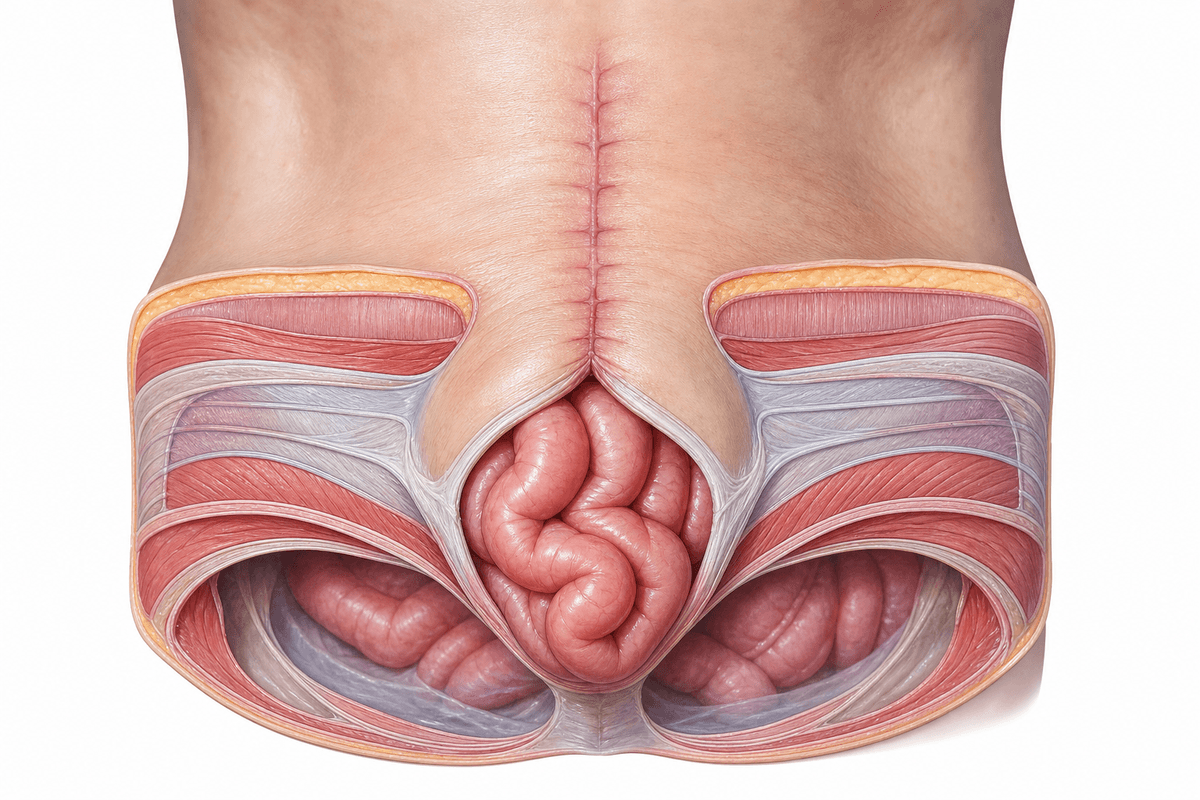
An incisional hernia in Visakhapatnam occurs when tissue protrudes through a weakened area in the abdominal wall at the site of a previous surgical incision. This type of hernia develops months or years after abdominal surgery when the surgical wound fails to heal properly, causing abdominal contents to bulge through the weakened muscle layer. Dr Ravi Chandra Reddy Obili provides specialized surgical treatment for incisional hernias using both open and laparoscopic repair techniques at his clinic in Visakhapatnam.
Defect less than 2 cm in the abdominal wall with minimal protrusion of tissue. Often asymptomatic but requires monitoring to prevent enlargement and complications over time.
Defect greater than 10 cm with significant bulging containing intestinal loops or omentum. Causes visible deformity, discomfort, and increased risk of incarceration or strangulation requiring urgent intervention.
Multiple defects or recurrent hernias with loss of abdominal domain and contaminated wounds. Requires specialized surgical techniques including component separation and biological mesh reconstruction for repair.
Multiple factors can contribute to the development and progression of this condition.
Incisional Hernia develops gradually. Recognising symptoms early gives you more treatment options.
From conservative to surgical — we always start with the least invasive option first.
A structured, patient-first approach from first visit to full recovery.
Dr Ravi Chandra Reddy Obili conducts thorough physical examination to assess hernia size, location, and reducibility. He reviews previous surgical history, medical conditions, and performs CT imaging to evaluate defect dimensions and plan the optimal surgical approach.
Based on hernia characteristics and patient factors, Dr Obili recommends the most appropriate repair technique—laparoscopic, open, or robotic. He discusses mesh options, expected outcomes, and addresses patient concerns to ensure informed decision-making and optimal preparation.
Dr Ravi Chandra Reddy performs the hernia repair using state-of-the-art techniques and equipment. He ensures complete reduction of hernia contents, placement of appropriately sized mesh with adequate overlap, and secure fixation to prevent recurrence while minimizing complications.
Dr Obili provides comprehensive postoperative instructions including pain management, wound care, and activity restrictions. He schedules regular follow-up appointments to monitor healing, address complications promptly, and guide patients through gradual return to normal activities.
What to expect at each phase of recovery.
Patients experience mild to moderate pain managed with medications. Walking is encouraged from day one while avoiding heavy lifting. Most laparoscopic patients return to light activities within one week, while open repair patients require longer initial rest.
Progressive return to daily activities with gradual increase in physical exertion. Abdominal wall strengthening begins under guidance. Most patients resume work during this period, though heavy physical labor requires additional time for complete healing.
Full tissue integration of mesh and restoration of abdominal wall strength occurs. Patients can resume all normal activities including exercise and heavy lifting. Long-term follow-up ensures sustained repair integrity and addresses any late complications.
Modern mesh-based repair techniques achieve 85-95% success rates with low recurrence when performed by experienced surgeons like Dr Ravi Chandra Reddy Obili using appropriate surgical methods and quality materials.
Successful repair eliminates the hernia bulge, restores normal abdominal contour, and strengthens the abdominal wall. Patients regain confidence in physical activities without fear of hernia progression or complications.
Relief from pain, discomfort, and activity limitations significantly enhances daily functioning. Patients report better ability to work, exercise, and perform routine tasks without hernia-related restrictions or concerns.
Surgical repair eliminates the risk of bowel incarceration, strangulation, and obstruction that can occur with untreated incisional hernias. This prevents life-threatening emergencies requiring urgent intervention with higher complication rates.
Untreated incisional hernias progressively enlarge over time, causing increasing pain, functional impairment, and visible deformity. The hernia can lead to bowel incarceration where intestinal loops become trapped, or strangulation where blood supply is compromised, creating life-threatening emergencies requiring urgent surgery. Emergency repairs carry significantly higher complication rates including infection, bowel resection, and mortality compared to elective planned procedures.
Seek immediate medical attention if you develop severe abdominal pain, nausea, vomiting, inability to pass gas or stool, or notice the hernia becomes hard, tender, or discolored, as these indicate potential strangulation. Schedule an appointment with Dr Ravi Chandra Reddy Obili if you notice any bulge or swelling near a previous surgical incision, experience discomfort at the site, or observe progressive enlargement of an existing hernia. Early evaluation allows for planned surgical repair with better outcomes compared to emergency situations.
Early treatment means more options and better outcomes. Book a consultation to understand your condition and explore the right path forward.