Performed by Dr. Ravi Chandra Reddy Obili at Dr Ravi Chandra Reddy
Biliary surgery refers to operations on the bile ducts, gallbladder, and related structures that carry bile from the liver to the intestine. These procedures address blockages, stones, infections, tumours, or injuries affecting bile flow. Dr Ravi Chandra Reddy performs both minimally invasive and open biliary surgeries depending on each patient's diagnosis and anatomy.
We believe in honest, upfront disclosure so you can make an informed decision.
A step-by-step look at what happens during this procedure.
General anaesthesia is given so you remain unconscious and pain-free throughout the operation.
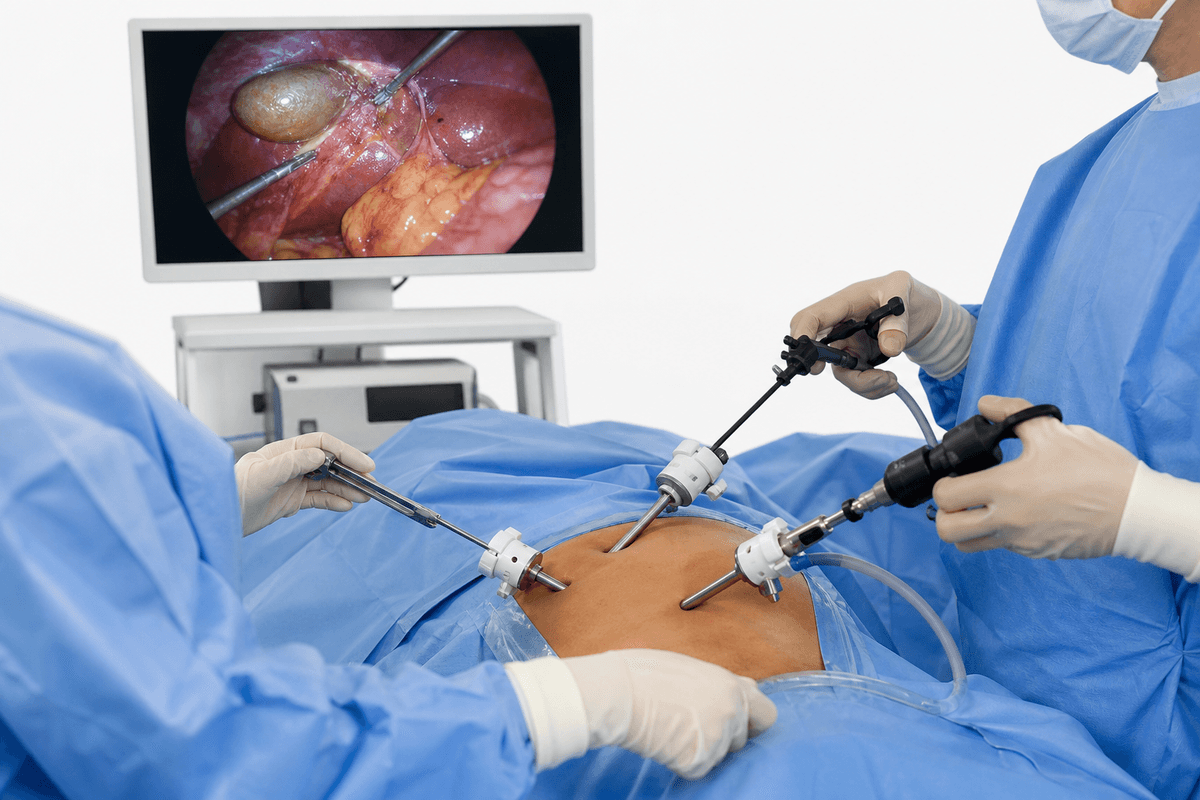
The surgeon makes small keyhole incisions for laparoscopic surgery or a larger incision for open surgery, depending on complexity and anatomy.
The gallbladder may be removed, bile ducts opened to clear blockages or stones, or damaged sections reconstructed. Drains may be placed to allow bile to exit safely.
X-ray or ultrasound may be used during the procedure to confirm complete stone removal or check bile duct anatomy.
Incisions are closed with sutures or staples, and dressings applied. You are moved to recovery as anaesthesia wears off.
A structured, patient-first approach from first consultation to full recovery.
Dr Ravi Chandra Reddy reviews all scans and test results to map biliary anatomy and plan the safest approach for each patient.
The surgery may be performed laparoscopically for faster recovery or through open surgery when complexity, inflammation, or previous operations require wider access.
Careful identification and protection of bile ducts, blood vessels, and surrounding organs throughout the procedure to reduce risk of injury.
Close observation in hospital for bile drainage, pain control, and early detection of any complications before discharge.
What to expect at each stage of your recovery journey.
Pain is managed with medication, drains are monitored, and diet is restarted gradually. Activity is limited to short walks around the ward.
Light activity only for the first 2-3 weeks. Avoid heavy lifting and straining. Wound care and signs of infection are reviewed at follow-up visits.
Most patients resume normal daily activities by 4-6 weeks. Full recovery and return to work or exercise depends on the type of surgery and individual healing.
Surgery often resolves symptoms caused by gallstones or bile duct blockages, such as abdominal pain, nausea, or yellowing of the skin.
Clearing obstructions or repairing ducts allows bile to flow normally, which improves digestion and prevents further complications like infection or pancreatitis.
Some conditions, such as bile duct cancers or complex strictures, may need additional therapies or staged procedures even after surgery.
Most people adapt well after gallbladder removal, though a few may experience looser stools or need dietary adjustments. The bile duct system continues to function.
The right choice depends on your diagnosis, risks and circumstances — discussed with you at your consultation.
ERCP (endoscopic retrograde cholangiopancreatography) can remove bile duct stones or place stents without surgery. It is often tried first for certain blockages but may not be suitable for all anatomy or complex disease.
A tube inserted through the skin into the bile ducts can relieve blockage temporarily. It is often used to stabilise patients before definitive surgery or when surgery carries too high a risk.
Some small, silent gallstones or mild biliary symptoms may be managed conservatively with dietary changes and medication. Surgery is considered if symptoms worsen or complications arise.
Let's clear up some of the most common myths about biliary surgery.
Get a personalised assessment from an experienced specialist. Understand your options, ask your questions, and decide with confidence.