Treated by Dr. Ravi Chandra Reddy Obili at Dr Ravi Chandra Reddy
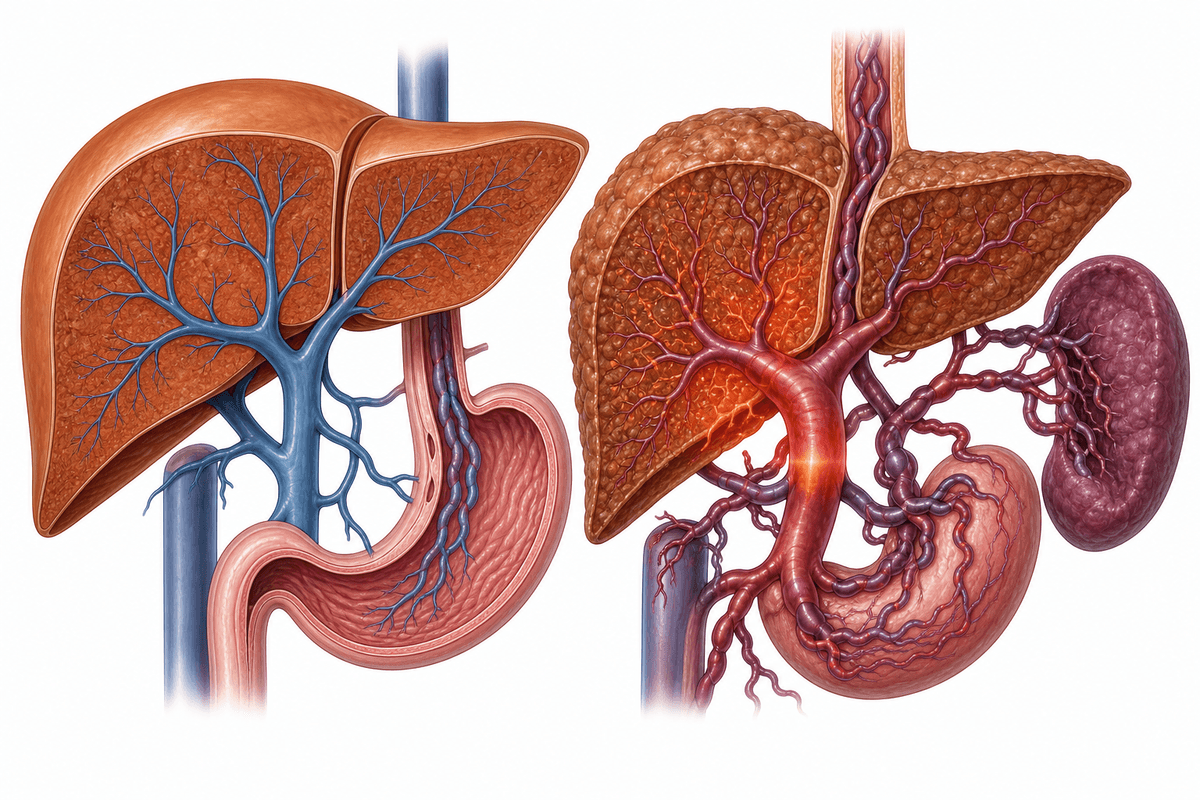
Portal hypertension is a serious condition characterized by increased blood pressure in the portal vein system, commonly seen in patients with liver disease in Visakhapatnam. This elevated pressure can lead to life-threatening complications including variceal bleeding, ascites, and hepatic encephalopathy. Dr Ravi Chandra Reddy Obili provides comprehensive surgical gastroenterology care for managing portal hypertension and its complications.
Caused by obstruction of the portal vein before it enters the liver, commonly due to portal vein thrombosis or splenic vein thrombosis. This type is less common and often seen in patients with hypercoagulable states or abdominal infections.
The most common type, resulting from liver cirrhosis, chronic hepatitis, or schistosomiasis. Increased resistance within the liver parenchyma leads to elevated portal pressure and development of varices and ascites.
Occurs due to obstruction of hepatic venous outflow, including Budd-Chiari syndrome, right heart failure, or constrictive pericarditis. This leads to hepatic congestion and subsequent portal pressure elevation.
Multiple factors can contribute to the development and progression of this condition.
Portal Hypertension develops gradually. Recognising symptoms early gives you more treatment options.
From conservative to surgical — we always start with the least invasive option first.
A structured, patient-first approach from first visit to full recovery.
Dr Ravi Chandra Reddy Obili conducts thorough assessment including upper GI endoscopy to grade varices, Doppler ultrasound to evaluate portal vein flow, CT or MRI imaging to assess liver morphology, and laboratory tests to determine liver function and disease severity using Child-Pugh and MELD scores.
Based on the underlying cause, severity of portal hypertension, and presence of complications, Dr Obili develops an individualized treatment plan that may include medical management, endoscopic therapy, interventional radiology procedures, or surgical intervention, with consideration for liver transplantation when indicated.
Dr Ravi Chandra Reddy Obili performs endoscopic variceal ligation for bleeding prevention, coordinates TIPS procedures with interventional radiologists for refractory cases, and performs surgical shunt procedures or devascularization operations when conservative measures fail, utilizing minimally invasive techniques whenever possible.
Regular follow-up includes surveillance endoscopy every 6-12 months, monitoring for ascites development and hepatic encephalopathy, nutritional optimization, infection prophylaxis, and continuous assessment for liver transplantation candidacy to ensure optimal long-term outcomes and quality of life.
What to expect at each phase of recovery.
Following endoscopic or surgical intervention, patients are monitored for bleeding complications, hemodynamic stability, and adequate nutritional intake. Hospital stay ranges from 1-2 days for endoscopic procedures to 7-14 days for surgical shunts, with careful management of ascites and encephalopathy prevention.
Over 4-12 weeks, patients gradually resume activities while maintaining strict medication compliance with beta-blockers and diuretics. Dietary modifications include sodium restriction, adequate protein intake, and avoidance of alcohol. Regular outpatient visits monitor liver function and treatment effectiveness.
Ongoing surveillance includes periodic endoscopy to monitor varices, liver function tests every 3-6 months, and imaging studies to assess disease progression. Patients are educated on recognizing warning signs of complications and maintaining lifestyle modifications to prevent disease advancement while optimizing candidacy for liver transplantation if needed.
Successful endoscopic variceal ligation reduces the risk of first variceal bleeding by 40-50% and rebleeding by 30-40%. Combined medical and endoscopic therapy achieves effective bleeding prophylaxis in 70-80% of patients, significantly reducing mortality from hemorrhagic complications.
Medical therapy with diuretics controls ascites in 85-90% of patients, while TIPS provides effective resolution of refractory ascites in 60-80% of cases. Improved ascites control enhances quality of life, reduces infection risk, and decreases hospitalization frequency.
Comprehensive portal hypertension management reduces emergency hospitalizations by 50-60%, minimizes debilitating symptoms like abdominal distension and fatigue, and allows patients to maintain better functional status and nutritional condition while awaiting transplantation or managing stable cirrhosis.
Appropriate portal hypertension treatment improves survival rates by 30-40% in cirrhotic patients and successfully bridges 70-80% of transplant candidates to surgery. Early intervention and regular monitoring optimize liver transplantation outcomes and provide extended survival for non-transplant candidates.
Untreated portal hypertension leads to life-threatening variceal hemorrhage with 30-50% mortality rate during first bleeding episode, progressive ascites causing respiratory compromise and spontaneous bacterial peritonitis, and hepatic encephalopathy resulting in coma and death. Without intervention, most patients with decompensated cirrhosis and portal hypertension survive less than 2 years, with quality of life severely impaired by recurrent complications requiring frequent hospitalizations.
Early treatment means more options and better outcomes. Book a consultation to understand your condition and explore the right path forward.