Treated by Dr. Ravi Chandra Reddy Obili at Dr Ravi Chandra Reddy
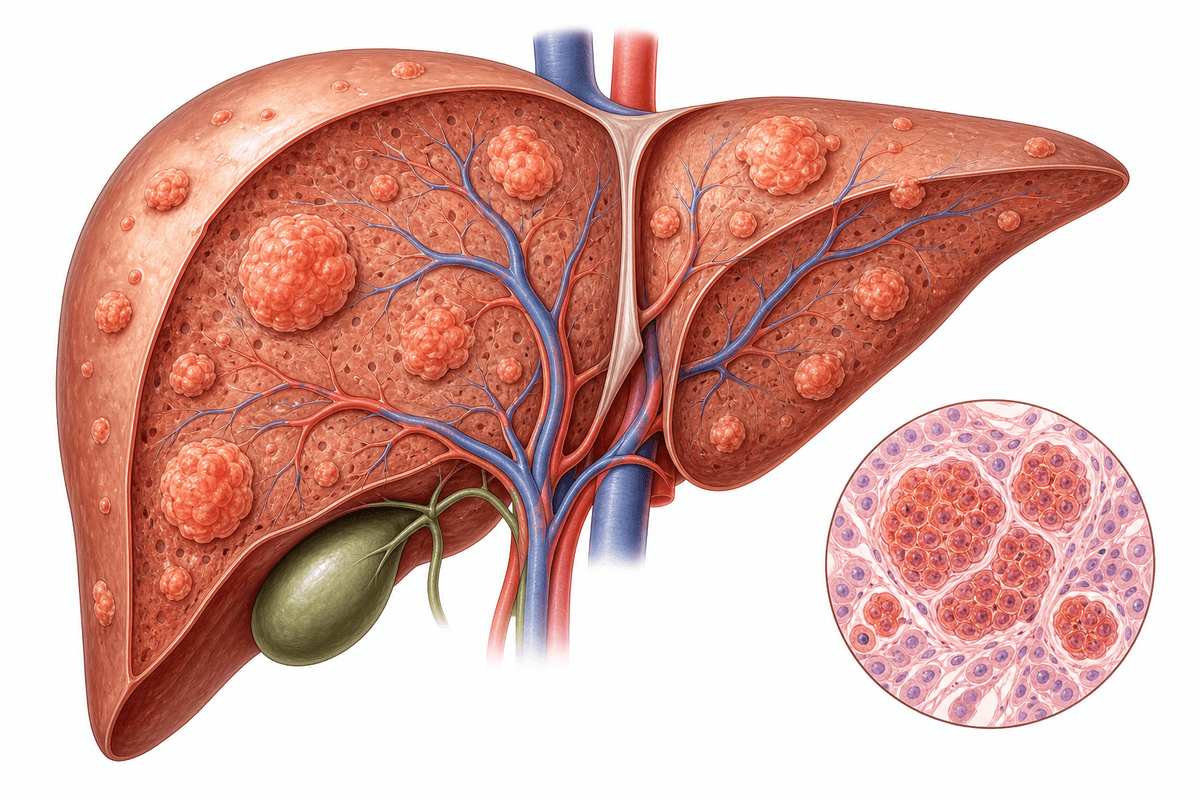
Colorectal Liver Metastases in Visakhapatnam occurs when colorectal cancer spreads to the liver, representing an advanced stage of disease that requires specialized surgical intervention. This condition affects a significant number of colorectal cancer patients and demands comprehensive multidisciplinary treatment. Dr Ravi Chandra Reddy Obili provides expert surgical gastroenterology care for patients with liver metastases.
Liver metastases detected at the same time as the primary colorectal cancer diagnosis, requiring coordinated treatment planning for both sites of disease.
Liver metastases that develop months or years after successful treatment of the primary colorectal cancer, often detected during surveillance imaging.
Cancer spread involving both the right and left lobes of the liver, representing more extensive disease that may require staged surgical approaches or combination therapies.
Multiple factors can contribute to the development and progression of this condition.
Colorectal Liver Metastases develops gradually. Recognising symptoms early gives you more treatment options.
From conservative to surgical — we always start with the least invasive option first.
A structured, patient-first approach from first visit to full recovery.
Dr Ravi Chandra Reddy Obili conducts thorough assessment including high-quality liver imaging with triphasic CT or MRI, complete staging to exclude extrahepatic disease, tumor marker analysis, and molecular profiling. He coordinates with medical oncologists and radiologists to develop personalized treatment strategies based on tumor biology and patient factors.
Dr Obili evaluates technical resectability, future liver remnant volume, and patient fitness for surgery. He employs advanced imaging reconstruction to plan optimal surgical approaches and may recommend neoadjuvant chemotherapy to downstage disease or portal vein embolization to increase future liver remnant before major resections.
Dr Ravi Chandra Reddy Obili performs expert hepatic resections using advanced surgical techniques including intraoperative ultrasound for lesion localization, parenchymal-sparing approaches when appropriate, and minimally invasive techniques for selected cases. He ensures adequate surgical margins while preserving maximum functional liver tissue to optimize outcomes.
Dr Obili provides comprehensive postoperative management with enhanced recovery protocols, coordinates adjuvant chemotherapy when indicated, and establishes rigorous surveillance programs with serial imaging and tumor marker monitoring. He maintains long-term follow-up to detect and manage recurrence early, offering repeat interventions when feasible.
What to expect at each phase of recovery.
Hospital stay of 5-7 days for major liver resection with monitoring of liver function, drain management, and early mobilization. Pain control, nutrition support, and prevention of complications are prioritized. Most patients can resume light activities within 2 weeks of discharge.
Progressive return to normal activities with liver function typically normalizing by 4-6 weeks. Wound healing completes and patients regain strength and appetite. Adjuvant chemotherapy may begin around 4-6 weeks post-surgery if indicated based on pathology results and patient recovery.
Regular follow-up with imaging every 3-6 months for the first 2-3 years, then annually. Tumor markers monitored at each visit. Liver function remains stable with regeneration of remaining liver tissue. Quality of life typically returns to baseline by 3 months, with continued surveillance for recurrence and long-term survival monitoring.
Complete surgical resection of liver metastases offers 5-year survival rates of 35-50% in selected patients, with some achieving complete cure. Outcomes are optimized when surgery is combined with modern systemic therapies.
Successful treatment relieves cancer-related symptoms, prevents progression of liver dysfunction, and allows patients to maintain active lifestyles. Most patients return to normal activities within 2-3 months of surgery.
Even when cure is not achieved, aggressive treatment including resection extends median survival significantly compared to chemotherapy alone, often providing years of quality life. Repeat resections for recurrence remain possible in many cases.
Modern parenchymal-sparing techniques and staged approaches preserve adequate liver function while achieving complete tumor removal. The liver's regenerative capacity allows recovery of normal function even after major resections in most patients.
Untreated colorectal liver metastases lead to progressive liver failure, intractable pain, severe jaundice, and ultimately death within months. The disease burden increases with development of additional metastases in the liver and other organs. Median survival without treatment is typically 6-12 months, with significant deterioration in quality of life as symptoms progress and liver function declines.
Patients with a history of colorectal cancer should maintain regular surveillance and seek immediate evaluation if they develop new right upper abdominal pain, jaundice, unexplained weight loss, or elevated liver enzymes on blood work. Anyone diagnosed with colorectal cancer should undergo comprehensive staging including liver imaging and consult with a surgical gastroenterologist experienced in hepatobiliary surgery. Early detection through surveillance imaging offers the best opportunity for curative treatment.
Early treatment means more options and better outcomes. Book a consultation to understand your condition and explore the right path forward.