Treated by Dr. Ravi Chandra Reddy Obili at Dr Ravi Chandra Reddy
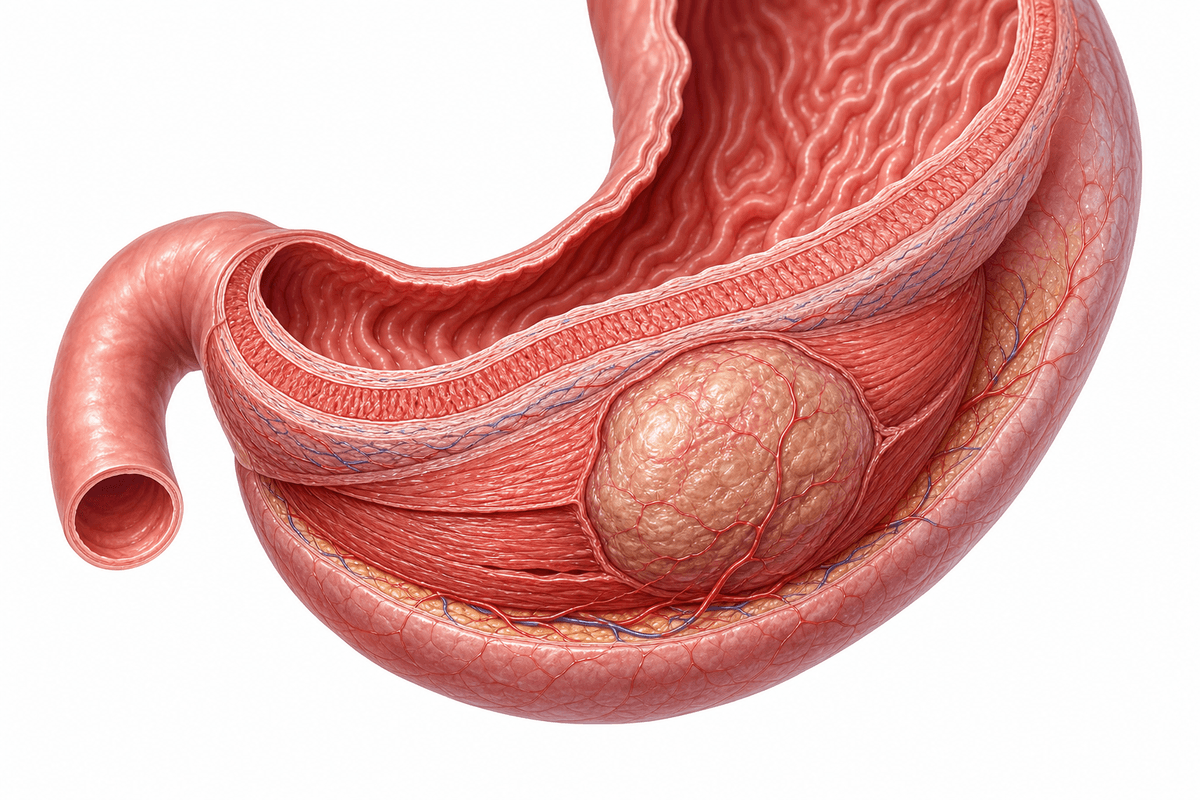
Gastrointestinal Stromal Tumours (GIST) in Visakhapatnam are rare soft tissue cancers that develop in the digestive tract, most commonly in the stomach or small intestine. These tumours originate from specialized nerve cells in the walls of the gastrointestinal tract and can vary from small, benign growths to large, aggressive cancers. Dr Ravi Chandra Reddy Obili provides comprehensive surgical management for GIST patients at his clinic in Visakhapatnam.
The most common type accounting for 60% of cases, arising in the stomach wall. These tumours typically have a better prognosis and are often discovered incidentally during endoscopy or imaging for other conditions.
Representing 30% of cases, these tumours develop in the small bowel and tend to be more aggressive. They often present with bleeding or obstruction and require careful surgical planning for complete resection.
Rare variants occurring in less than 10% of cases, found in the colon, rectum, or esophagus. These locations present unique surgical challenges and may require specialized approaches for optimal treatment outcomes.
Multiple factors can contribute to the development and progression of this condition.
Gastrointestinal Stromal Tumours (GIST) develops gradually. Recognising symptoms early gives you more treatment options.
From conservative to surgical — we always start with the least invasive option first.
A structured, patient-first approach from first visit to full recovery.
Dr Ravi Chandra Reddy conducts thorough assessment including detailed CT scans with contrast, upper endoscopy or colonoscopy with biopsy, and specialized immunohistochemistry testing to confirm GIST diagnosis. He evaluates tumour size, location, and mutation analysis to determine risk stratification and optimal treatment strategy for each patient.
Dr Ravi Chandra Reddy collaborates with medical oncologists, pathologists, and radiologists to develop personalized treatment plans. He determines whether neoadjuvant imatinib therapy is beneficial to shrink large tumours before surgery, plans the most appropriate surgical approach, and discusses adjuvant therapy requirements based on tumour risk factors.
Dr Ravi Chandra Reddy performs precise surgical resection using laparoscopic or open techniques based on tumour characteristics. He ensures complete removal with adequate margins while preserving maximum organ function, employing careful handling techniques to prevent tumour rupture and peritoneal contamination, which could worsen prognosis.
Dr Ravi Chandra Reddy provides comprehensive postoperative care including coordination of adjuvant imatinib therapy when indicated, regular CT surveillance every 3-6 months to detect recurrence early, and long-term monitoring as GIST can recur years after initial treatment. He ensures patients receive ongoing support and prompt management of any complications.
What to expect at each phase of recovery.
Hospital stay of 3-10 days depending on surgical approach with pain management, gradual resumption of oral intake, and monitoring for complications. Patients receive wound care instructions, dietary modifications starting with liquids progressing to soft foods, and early mobilization to prevent complications. Most patients experience significant improvement in symptoms within the first week.
Gradual return to normal activities with lifting restrictions and dietary advancement to regular foods. Surgical pathology review confirms diagnosis and risk stratification, determining need for adjuvant imatinib therapy. Dr Ravi Chandra Reddy monitors healing, manages any delayed complications, and coordinates with oncology for targeted therapy initiation if required based on tumour characteristics.
Regular follow-up with CT scans every 3-6 months for the first 3-5 years, then annually thereafter as GIST has potential for late recurrence. Patients on adjuvant imatinib therapy continue treatment for 1-3 years or longer depending on risk factors. Dr Ravi Chandra Reddy ensures comprehensive monitoring for recurrence and management of any therapy-related side effects for optimal long-term outcomes.
Dr Ravi Chandra Reddy achieves complete surgical resection with negative margins in over 90% of localized GIST cases, which is the most important factor for long-term cure. Meticulous surgical technique prevents tumour rupture and ensures optimal oncological outcomes with minimal residual disease risk.
Patients with completely resected small, low-risk GISTs have five-year survival rates exceeding 90-95%. Even intermediate and high-risk GISTs show significantly improved outcomes when combined with appropriate adjuvant imatinib therapy, with five-year survival rates of 70-80% in properly managed cases.
Laparoscopic surgical approach and organ-preserving resection techniques maintain excellent digestive function and quality of life. Most patients return to normal eating, work, and daily activities within 4-6 weeks with minimal long-term dietary restrictions or digestive complications after recovery.
Regular surveillance enables early detection of recurrence or metastasis, which can be effectively treated with repeat surgery, escalation of targeted therapy, or alternative tyrosine kinase inhibitors. Dr Ravi Chandra Reddy's comprehensive follow-up protocol ensures prompt intervention when needed, optimizing long-term survival even in recurrent disease.
Untreated GIST can lead to life-threatening complications including massive gastrointestinal bleeding requiring emergency intervention, tumour rupture causing peritoneal contamination and widespread metastasis, and progressive growth causing bowel obstruction. Even small GISTs carry malignant potential and can metastasize to the liver, peritoneum, or other sites, significantly reducing survival rates. Advanced untreated GIST becomes increasingly difficult to manage surgically and may develop resistance to targeted therapies, resulting in poor prognosis and severely compromised quality of life.
Seek immediate medical attention from Dr Ravi Chandra Reddy if you experience persistent abdominal pain, unexplained weight loss, blood in stools or black tarry stools, severe anemia symptoms like extreme fatigue and dizziness, or a palpable abdominal mass. Early consultation is crucial if you have been incidentally found to have a gastrointestinal mass on imaging or endoscopy, as timely diagnosis and treatment significantly improve outcomes. Even vague digestive symptoms persisting beyond 2-3 weeks warrant evaluation to rule out underlying pathology including GIST.
Early treatment means more options and better outcomes. Book a consultation to understand your condition and explore the right path forward.