Treated by Dr. Ravi Chandra Reddy Obili at Dr Ravi Chandra Reddy
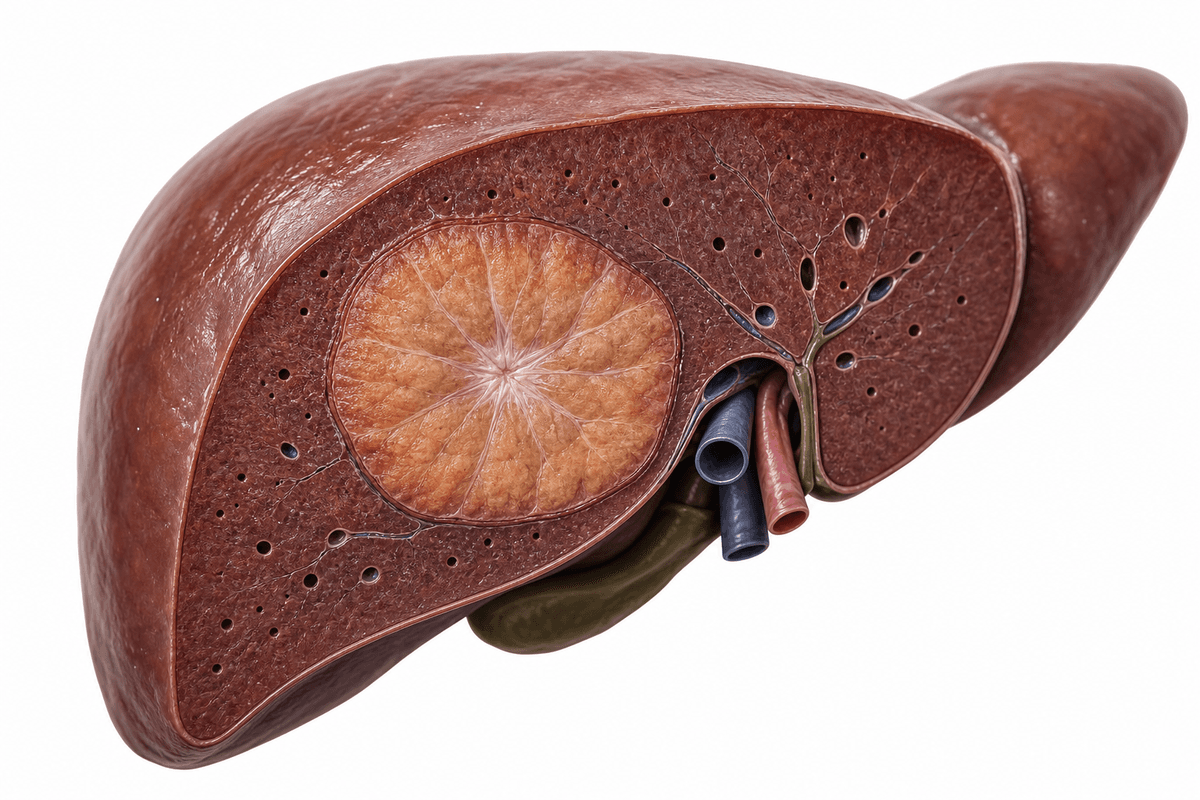
Focal Nodular Hyperplasia (FNH) is a benign liver tumor that occurs in Visakhapatnam and worldwide, typically affecting women of childbearing age. It is the second most common benign liver lesion, characterized by a central scar and nodular architecture, usually discovered incidentally during imaging studies. Dr Ravi Chandra Reddy Obili provides comprehensive evaluation and management of FNH for patients in Visakhapatnam.
The most common type accounting for 80% of cases, characterized by a central stellate scar, fibrous septa radiating from the center, and normal hepatocytes arranged in nodules. This type has distinctive imaging features on MRI and CT scans.
Represents 20% of cases with atypical features including absence of central scar, steatotic changes, or telangiectatic appearance. This variant may be more challenging to diagnose and differentiate from other liver lesions on imaging studies.
Rare presentation where patients develop two or more FNH lesions in the liver, sometimes associated with hepatic hemangiomas or vascular malformations. This type may require more comprehensive imaging evaluation and monitoring.
Multiple factors can contribute to the development and progression of this condition.
Focal Nodular Hyperplasia develops gradually. Recognising symptoms early gives you more treatment options.
From conservative to surgical — we always start with the least invasive option first.
A structured, patient-first approach from first visit to full recovery.
Dr Ravi Chandra Reddy Obili performs detailed assessment including review of imaging studies (MRI with hepatobiliary contrast, triphasic CT), liver function tests, and tumor markers to accurately characterize the lesion and differentiate FNH from other liver masses.
Based on lesion size, location, symptoms, and patient factors, Dr Obili develops an individualized management plan ranging from observation to surgical intervention, discussing all options and expected outcomes with the patient and family.
When surgery is indicated, Dr Ravi Chandra Reddy Obili utilizes minimally invasive laparoscopic techniques whenever feasible, employing advanced instrumentation and liver-sparing resection strategies to achieve optimal outcomes with minimal morbidity.
Dr Obili ensures comprehensive postoperative monitoring including wound care, liver function assessment, and surveillance imaging to confirm complete recovery, verify no recurrence, and address any patient concerns during the healing process.
What to expect at each phase of recovery.
For surgical cases, patients typically stay 2-4 days in hospital with pain management, early mobilization, and monitoring of liver function. Laparoscopic cases generally have faster recovery with most patients resuming light activities within 1-2 weeks.
Spanning 2-6 weeks post-surgery, patients gradually increase activity levels, return to work for desk jobs, and undergo follow-up imaging to assess surgical site healing. Dietary restrictions are minimal with focus on balanced nutrition to support liver regeneration.
Most patients achieve complete recovery by 6-8 weeks with full return to normal activities. Surveillance imaging at 6 months and annually thereafter confirms no recurrence, though recurrence of FNH is extremely rare after complete resection.
Over 95% of patients with FNH remain asymptomatic throughout their lives with no intervention needed. The lesions typically remain stable in size and do not undergo malignant transformation, allowing safe long-term observation.
Surgical resection provides definitive cure with recurrence rates less than 1%. Patients experience symptom resolution, confirmed benign diagnosis, and peace of mind with excellent quality of life restoration post-recovery.
FNH itself has very low risk of complications including hemorrhage, rupture, or malignant change. Even large lesions rarely cause significant problems, and surgical intervention when needed has high success rates with low morbidity.
Whether managed conservatively or surgically, liver function remains normal in FNH patients. The surrounding liver parenchyma is healthy, and even after resection, the liver regenerates effectively maintaining full hepatic capacity.
Most focal nodular hyperplasia cases remain stable and asymptomatic throughout life without treatment, as FNH is benign and does not transform into cancer. However, very large lesions left unmonitored may rarely cause persistent pain, mass effect on adjacent organs, or in exceptional cases, spontaneous hemorrhage. The primary risk of not seeking medical evaluation is missing alternative diagnoses that may require intervention.
Consult Dr Ravi Chandra Reddy Obili if you have been diagnosed with a liver lesion on imaging studies and need confirmation of diagnosis or management guidance. Immediate medical attention is warranted if you experience sudden severe abdominal pain, signs of internal bleeding such as dizziness or fainting, or if a known FNH lesion shows rapid growth on surveillance imaging. Patients with persistent abdominal discomfort or those concerned about their liver health should seek expert surgical gastroenterology evaluation.
Early treatment means more options and better outcomes. Book a consultation to understand your condition and explore the right path forward.