
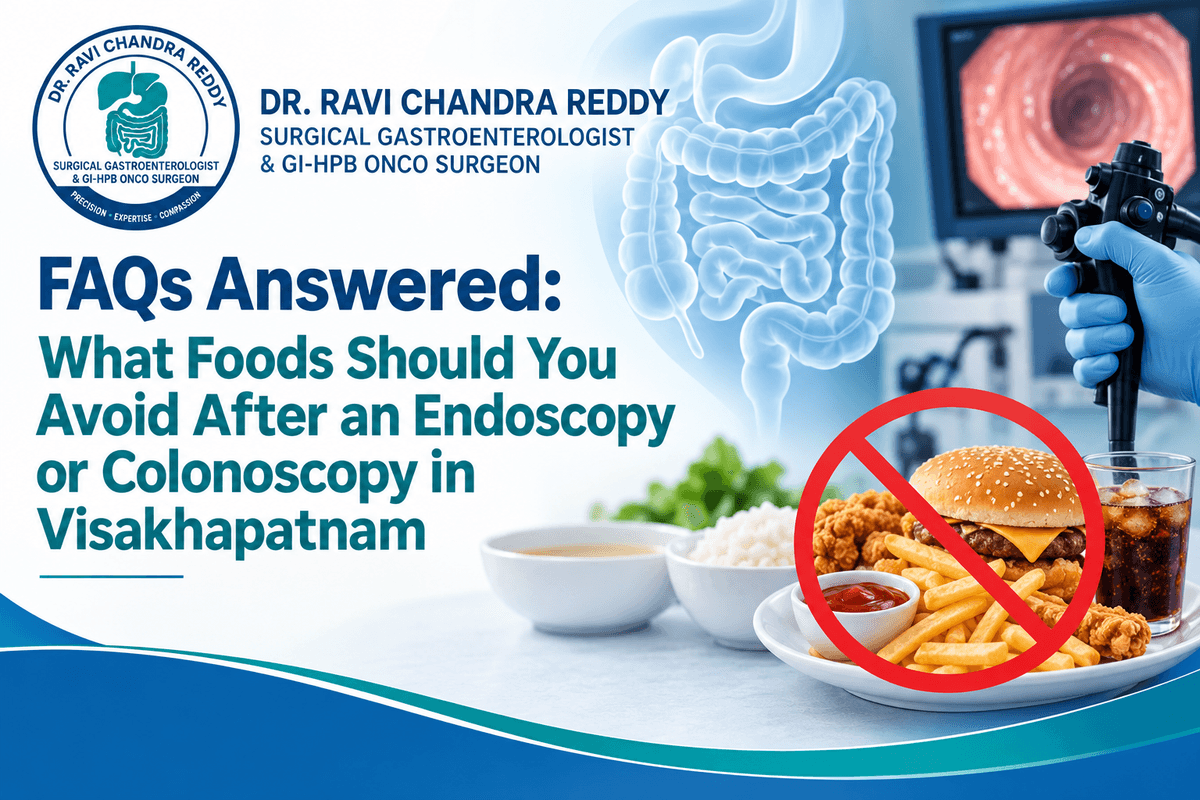
FAQs Answered: What Foods Should You Avoid After an Endoscopy or Colonoscopy in Visakhapatnam
The Question Every Patient Asks on the Way Home
You've just completed your endoscopy or colonoscopy at a clinic in Visakhapatnam. The sedation is wearing off, the procedure is done — and suddenly, your stomach growls. Your first instinct is to reach for a plate of hot biryani or a cup of strong filter coffee. But your gut (quite literally) is not ready for that yet.
This is the single most common concern patients raise after gastrointestinal procedures in Krishna Nagar and across Visakhapatnam: "Doctor, what can I eat now?" It sounds like a simple question, but eating the wrong food too soon after an endoscopy or colonoscopy can trigger bloating, cramping, nausea, and in some cases, serious complications — especially if a biopsy was taken or a polyp was removed.
After a colonoscopy or endoscopy, you'll likely have questions about the recovery process, especially if it's your first time. Knowing what's normal, how to manage post-procedure symptoms, and when to reach out to your doctor can make recovery easier. This blog answers the most frequently asked questions about post-procedure diet — with medically sound, direct guidance tailored for patients in Visakhapatnam.
The Direct Answer: What to Avoid and Why
The list of foods to avoid when you return home after a colonoscopy is substantial. It's best not to fill your plate with foods that are slower and more difficult to digest, including red meat, raw vegetables and salad, corn, fruits with skin (such as whole apples, pears, and grapes), dried fruit, milk and dairy products, nuts and seeds, whole-grain products, brown rice, spicy or heavily seasoned dishes, high-fat foods, and fried foods.
For endoscopy patients specifically, the throat and upper GI tract also need time to recover. After a gastroscopy, your throat may feel numb or slightly sore for a few hours. Stick to soft foods initially and avoid hot drinks until sensation returns.
Lactase, the enzyme that digests dairy, is found on the very top of your gut lining. This lining can be washed away by bowel prep, and lactase can be washed away with it — giving you a temporary case of lactose intolerance. So it's best to avoid dairy for 1 to 2 days after your colonoscopy.
Fried, greasy foods are hard on your gut and lead to bloating and gas. It's best to avoid them for a day or two after a colonoscopy.
You should avoid all alcohol, including beer and wine, for the first 24 hours after a colonoscopy.
In short: avoid spicy, fried, raw, high-fibre, and dairy-heavy foods for at least 24–48 hours after your procedure.
How Dr. Ravi Chandra Reddy Obili Guides Your Recovery in Krishna Nagar
Recovering from a gastrointestinal procedure isn't just about what you ate that evening — it's about giving your entire digestive tract the right environment to heal. At his gastroenterology practice in Krishna Nagar, Visakhapatnam, Dr. Ravi Chandra Reddy Obili provides patients with structured, personalised post-procedure dietary guidance that accounts for what was found, what was done, and what your digestive system needs next.
Here's the practical roadmap Dr. Obili recommends for patients in Visakhapatnam:
In the first 1–2 hours: After the colonoscopy or endoscopy is done, avoid taking solid foods — for the first 1 to 2 hours, take only clear liquids to help with initial digestion.
Moving to soft foods: It's best to eat bland, soft foods while upping fluid intake immediately after a colonoscopy. Most people can return to their normal diet within 24 hours. Think rice kanji, plain idli without sambar, soft-boiled eggs, or thin dal soup — familiar Telugu kitchen staples that are gentle on a recovering gut.
Reintroducing fibre: After a day or two, one must slowly begin to consume fibre products in order to promote healthy digestion — but without overwhelming the bowels.
Hydration: Increasing fluid intake is also important, as the colonoscopy process may lead to mild dehydration. Push liquids more than usual for the first 24 hours after the procedure.
If a polyp was removed or a biopsy was taken during your procedure, Dr. Obili may recommend an extended modified diet period. For patients who have polyps removed during their colonoscopies, the gastroenterologist may also recommend other specific foods to avoid. Every patient who walks into the clinic in Krishna Nagar leaves with a clear, written diet plan — no guessing, no generic advice.
Why This Matters: The Evidence Behind Post-Procedure Diet Care
Gastrointestinal procedures are becoming increasingly common across India and Andhra Pradesh. Colonoscopy is the largest segment in India's gastrointestinal endoscopy market, with a revenue of USD 164.57 million in 2024. The market is valued at USD 383.38 million overall and is likely to grow at a CAGR of 6.90% between 2024 and 2032. This rapid growth means more patients than ever in cities like Visakhapatnam are undergoing these procedures — and need reliable post-procedure guidance.
Population projections indicate a 101% increase in colorectal cancer (CRC) incidence and a 110% rise in mortality by 2050, driven primarily by ageing demographics and lifestyle transitions. Early detection through colonoscopy and endoscopy is more critical than ever — and proper recovery care ensures patients can repeat these vital screenings without fear or complications.
Direct visualisation tests such as colonoscopy (sensitivity: 95%, specificity: 86–89%) have proven efficacy in reducing CRC mortality across multiple cohorts and trials. But the procedure's benefit is only fully realised when post-procedure care — including diet — is taken seriously.
Most people recover from a colonoscopy without significant difficulty. Temporary tiredness from sedation, abdominal bloating, wind, and mild cramping are common during the first several hours. Following the right dietary protocol minimises these effects and accelerates your return to normal life.
Frequently Asked Questions (FAQs)
1. How soon can I eat after an endoscopy or colonoscopy in Visakhapatnam?
You can begin eating relatively soon after your procedure, but start slowly. Most people can eat as soon as they recover from anaesthesia after a colonoscopy, but you want to avoid foods that can irritate your gut for at least 24 hours. For endoscopy patients, wait until the throat numbness fully subsides before attempting solid food to avoid the risk of choking.
2. Can I drink tea or coffee after my colonoscopy?
It's best to wait. You can drink coffee after a colonoscopy, but you may want to avoid caffeine for up to 24 hours because it can cause uncomfortable symptoms — caffeine can make you urinate more (increasing dehydration risk), make your bowels contract faster (worsening gas pains), and irritate your stomach, worsening heartburn. Opt for lukewarm water, coconut water, or mild herbal tea instead.
3. What Indian foods are safe to eat after an endoscopy or colonoscopy?
Stick with easy-to-digest foods like crackers, white breads, and soft fish, as well as completely cooked, soft vegetables. In the Indian context, patient-friendly options include plain rice kanji (congee), soft plain idli without spicy chutneys, moong dal soup, mashed potato without seasoning, and ripe banana. Avoid tamarind-heavy dishes, spicy curries, pickles (avakaya), and oily snacks like pakodas or vadas for at least 24–48 hours.
4. Is it normal to feel bloated or gassy after a colonoscopy at a clinic in Krishna Nagar, Visakhapatnam?
Yes, absolutely — this is one of the most common concerns patients from Krishna Nagar and surrounding areas of Visakhapatnam report after their procedure. Mild bloating, gas, cramping, and temporary drowsiness are common after a colonoscopy. If you feel very gassy, walking, warmth, and time are the best solutions. After-colonoscopy bloating typically fades within a day. However, if the pain is severe or persistent, contact your gastroenterologist immediately.
5. When should I be concerned and call my doctor after the procedure?
Significant bleeding, severe or worsening pain, fever, repeated vomiting, fainting, or breathing difficulty requires prompt medical assessment. After an endoscopy, avoid eating heavy or greasy foods, drinking alcohol, or smoking for at least 24 hours, as these can irritate the digestive tract — particularly areas like the small intestine and duodenum where the procedure may have involved detailed examination. If you experience any of these warning signs after a procedure performed in Visakhapatnam, do not wait — seek medical attention the same day.
This blog is for informational purposes only and does not substitute personalised medical advice. Always follow the specific post-procedure instructions provided by your gastroenterologist.
Visit Us
Visit Ravi Chandra Reddy Obili - Gastroenterologist for trusted, compassionate care. We're here for you and your family.
Ravi Chandra Reddy Obili - Gastroenterologist
Krishna Nagar, Visakhapatnam, Andhra Pradesh
Phone: 917337422216
Website: drravichandrareddygastrosurgeon.com
Google Maps: https://www.google.com/maps/place/?q=place_id:ChIJz1HwTwBpOToRjUbDE0b-PrM
Email: help@drravichandrareddygastrosurgeon.com